
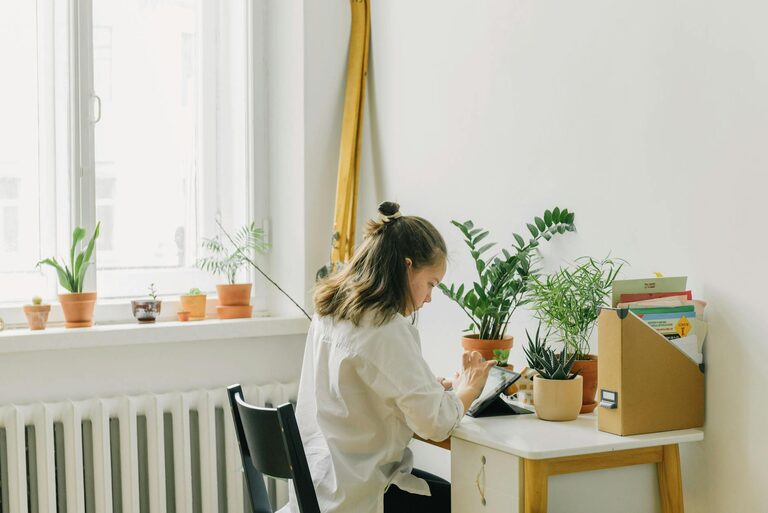
Creating a home office that is both calming and productive can significantly improve your work-from-home experience. With more people spending time working remotely, a well-designed workspace is essential for maintaining focus and reducing stress. Here are some practical tips to help you create a home office space that encourages calmness and enhances productivity.
1. Choose the Right Location
Selecting where to set up your home office is the first step. Ideally, it should be a quiet area away from household distractions.
– Natural Light: Choose a spot with plenty of natural light. Sunlight boosts mood and energy levels, reducing eyestrain.
– Minimise Noise: If possible, create your office in a room with a door, or use noise-cancelling headphones if the space is shared.
– Separate Space: Try to avoid working in bedrooms or kitchens to help maintain a boundary between work and relaxation.
2. Invest in Comfortable Furniture
Comfort is key when spending long hours at your desk.
– Ergonomic Chair: Choose a chair that supports your back and encourages good posture.
– Adjustable Desk: Consider a desk that can be adjusted in height, allowing you to alternate between sitting and standing.
– Desk Size: Ensure your desk has enough space to hold essentials like your computer, paperwork, and a few personal items without feeling cluttered.
3. Organise Your Workspace Efficiently
An organised desk helps clear your mind and improves focus.
– Declutter Regularly: Keep only the items you use daily on your desk. Store other supplies in drawers or shelves.
– Storage Solutions: Use organisers, trays, or filing cabinets to keep paperwork and stationery tidy.
– Cable Management: Tidy cables with clips or covers to avoid distractions and safety hazards.
4. Use Soothing Colours and Decor
Colours have a big effect on mood and concentration.
– Soft Colours: Choose calming paint colours such as soft blues, greens, or neutrals to create a serene environment.
– Personal Touches: Add plants, art, or photos to make the space inviting but avoid overcrowding.
– Functional Lighting: In addition to natural light, use adjustable desk lamps or soft overhead lighting to reduce eye strain.
5. Incorporate Nature Elements
Bringing nature indoors can have calming effects and improve air quality.
– Indoor Plants: Easy-to-care-for plants like spider plants or succulents add a touch of greenery.
– Natural Materials: Incorporate wood, stone, or natural fibres in furniture or accessories to create warmth.
6. Set Up Technology Thoughtfully
Technology is essential but can be distracting if not managed well.
– Reliable Equipment: Ensure your computer, printer, and other tech are in good working order to avoid frustration.
– Screen Positioning: Place your monitor at eye level to reduce neck strain.
– Limit Distractions: Use apps or settings that help block non-work-related notifications during work hours.
7. Establish a Productive Routine
Your environment supports productivity, but your habits matter too.
– Regular Breaks: Follow the Pomodoro technique or similar to take short breaks; this refreshes your mind.
– Defined Work Hours: Stick to a schedule to separate work time from personal time.
– Incorporate Movement: Stand, stretch, or take a walk during breaks to stay energised.
8. Maintain Good Air Quality and Temperature
Comfortable air quality and temperature can help you focus better.
– Ventilation: Open windows when possible to circulate fresh air.
– Room Temperature: Keep the room at a comfortable temperature, typically between 18–22°C.
– Air Purifiers: For those sensitive to dust or allergens, an air purifier can improve breathing comfort.
9. Minimise Distractions
To stay productive, create a workspace with minimal disruptions.
– Control Phone Use: Keep your phone out of immediate reach unless needed for work.
– Sound Management: Use background music or white noise to block distracting sounds if complete silence isn’t possible.
– Clear Boundaries: Let household members know your work hours to reduce interruptions.
—
Final Thoughts
Creating a calming and productive home office is about balancing comfort with functionality. By thoughtfully choosing your location, investing in ergonomic furniture, managing clutter, and incorporating elements that promote relaxation, you can build a workspace that supports your well-being and efficiency. Remember, the goal is to create a space where you feel motivated to work while also being able to unwind when needed.
With these tips, your home office can become a place where productivity and peace go hand in hand. Happy working!