
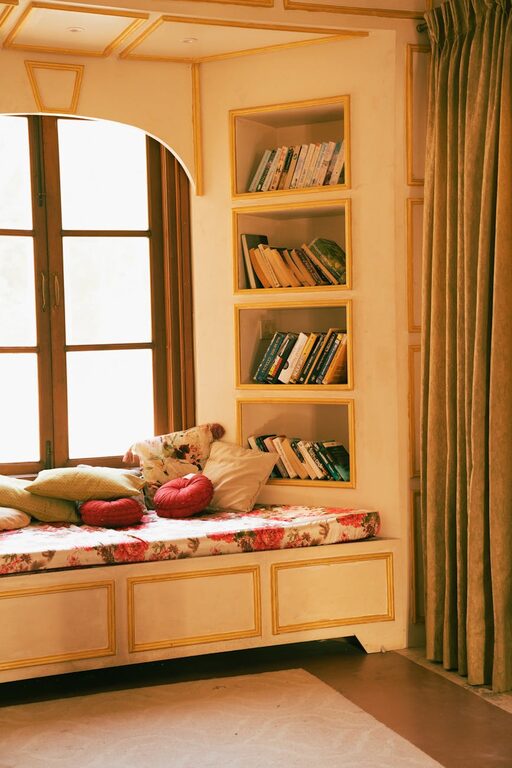
Creating a reading nook at home is a brilliant way to carve out some peaceful time for yourself. Whether you have a spacious room or just a small corner, a thoughtfully designed reading nook can become your personal sanctuary—a comfy spot to escape, unwind, and get lost in a book. In this post, we’ll share useful tips to help you create a cosy and inviting reading nook tailored to your space and style.
Choose the Perfect Spot
Finding the right location is the first step. Consider these options:
– A quiet corner: Empty corners or little recesses work well for reading nooks. They offer a sense of privacy and help minimise distractions.
– Near a window: Natural light not only brightens the space but also reduces eye strain, making it an ideal spot for reading during the day.
– Under the stairs or in an alcove: These unusual spaces can be transformed creatively with cushions and lighting.
– Unused nooks in living rooms or bedrooms: Look for areas that are underutilised within larger rooms.
Remember, your nook should feel separate from busy areas so you can relax fully.
Pick Comfortable Seating
Comfort is key when it comes to a reading nook—after all, you’ll be spending time here.
– Armchairs or lounge chairs: A padded armchair with good back support is a classic choice.
– Window seats or benches: Add cushions and throws for comfort. These can double as storage units underneath.
– Bean bags or floor cushions: Perfect for smaller spaces and provide a more casual feel.
– Small sofas or loveseats: Great if you like to read with company or prefer to stretch out.
Include cushions and soft blankets to make the seat even cosier.
Lighting Matters
Good lighting is essential for enjoyable reading sessions. You want enough light to avoid straining your eyes, but it should also contribute to a relaxing atmosphere.
– Natural daylight: Maximise daylight with unobstructed windows and light curtains.
– Task lighting: Use adjustable reading lamps or floor lamps positioned close to your seating.
– Ambient lighting: Fairy lights, candles (real or electric), or dimmable lamps add warmth and charm.
– Avoid glare: Place lamps to avoid direct glare on book pages or e-readers.
Add Storage for Your Books
Keep your favourite books within arm’s reach to maintain the nook’s inviting feel.
– Shelves: Wall-mounted shelves, bookcases, or floating shelves save space and showcase your book collection.
– Baskets or boxes: Great for storing magazines, paperback books, or knitting projects.
– Multi-purpose furniture: Try seating with built-in storage or side tables with shelves.
Organising your books neatly encourages you to spend more time reading.
Decorate with Personal Touches
Make your reading nook uniquely yours by adding accessories and decor that reflect your personality.
– Soft rugs and throw blankets: They add warmth and texture.
– Plants: Small indoor plants or succulents bring life and enhance air quality.
– Art and photos: Hang pictures or artwork that inspire calm and creativity.
– Bookmarks and bookends: Functional but pretty accessories.
Choose colours and textures that soothe you and complement your home’s style.
Keep It Inviting
A successful reading nook welcomes you to settle in and stay awhile. Here are ways to maintain that inviting vibe:
– Keep it tidy: Avoid clutter and regularly organise the space.
– Use cosy fabrics: Wool, fleece, or faux fur can elevate comfort.
– Provide a side table: For your cup of tea, reading glasses, or notes.
– Add music or sound: A gentle playlist or white noise can enhance relaxation.
– Temperature control: Ensure the nook isn’t too cold or hot.
Make It Functional
Aside from comfort, your nook should be practical.
– Good ventilation: Fresh air helps you stay alert and relaxed.
– Power outlets: Handy for charging e-readers or lamps.
– Clear space: Enough room to stretch or keep additional books nearby.
Ideas for Small Spaces
Even limited space can accommodate a charming reading nook.
– Use a corner shelf combined with a compact chair.
– Place a cosy floor cushion with a low lamp.
– Install a hanging chair near a window.
– Convert a cupboard or closet into a mini-library.
Final Thoughts
Creating a cosy and inviting reading nook at home is all about blending comfort, good lighting, and personal style. With a bit of creativity, you can turn almost any space into your perfect reading retreat. So gather your favourite books, prepare a warm drink, and immerse yourself in your new favourite spot for relaxation and discovery. Happy reading!